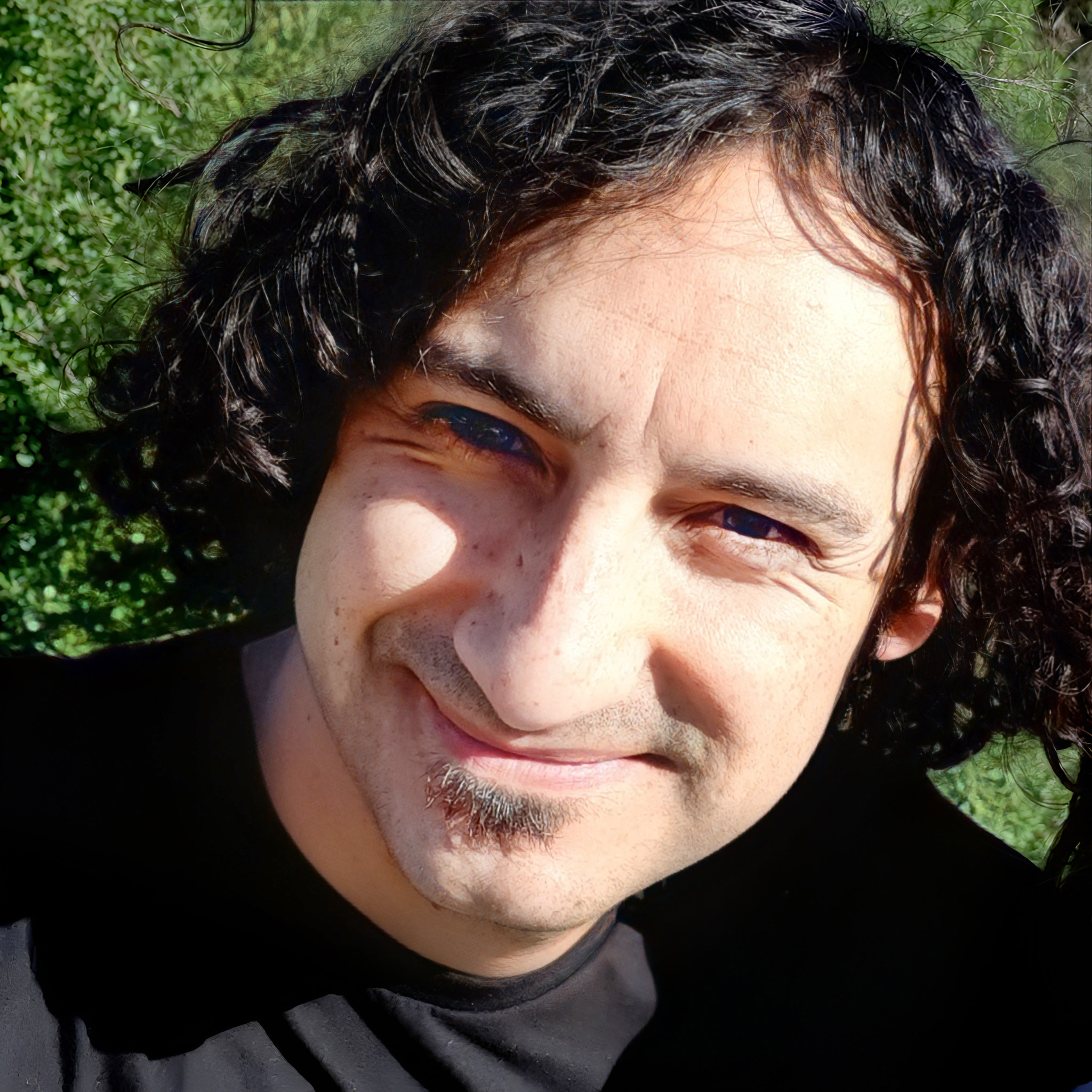
Adam Wolk
Microsoft


LEARN, CONNECT, BUILD
Ready to get started with AI and the latest technologies? Microsoft Reactor provides events, training, and community resources to help developers, entrepreneurs and startups build on AI technology and more. Join us!
LEARN, CONNECT, BUILD
Ready to get started with AI and the latest technologies? Microsoft Reactor provides events, training, and community resources to help developers, entrepreneurs and startups build on AI technology and more. Join us!
16 June, 2026 | 3:00 PM - 9:00 PM (UTC) Coordinated Universal Time
 Livestream
Topic: Open Source
Language: English
Now in its 5th year, POSETTE: An Event for Postgres (pronounced /Pō-zet/) is a free and virtual developer event. The name POSETTE stands for Postgres Open Source Ecosystem Talks Training & Education. Happening Jun 16-18, 2026, join us for 4 unique livestreams to hear from open source users and experts in many aspects of the PostgreSQL ecosystem—including on Azure. Come learn what you can do with the world’s most advanced open source relational database—from the nerdy to the sublime. Come chat with POSETTE speakers & other community members on the #posetteconf channel in the Microsoft Open Source Discord before, during, and after the event. Full schedule & speakers for Livestream 1 below. In the meantime, you can catch up on last year’s talks at https://aka.ms/posette-playlist.
Learn more about POSETTE 2026 at https://posetteconf.com/2026/
Livestream 1 Agenda
--
| Session Title | Session Description | Speaker |
|---|---|---|
| Keynote: Driving Postgres forward at Microsoft | Microsoft is deeply invested in Postgres. Both in the upstream open source project and as a premier cloud database offering. In this keynote, Charles Feddersen and Affan Dar, who lead PostgreSQL engineering at Azure, will share how Microsoft is driving Postgres forward today: not just as a database to run in the cloud, but as an open source project we’re investing in for the long run. They’ll talk about what that looks like in practice, including Microsoft’s work in the Postgres community, recent contributions into core Postgres, and how those efforts shape the Azure Database for PostgreSQL managed service. The session will also touch on database migrations, developer tools, and why we created Azure HorizonDB. This is a technical, inside look at why Postgres matters to Microsoft, what the team has been focused on recently, and how that work connects back to the broader Postgres ecosystem. |
Affan Dar, Charles Feddersen |
| JSON in PostgreSQL - evil data type or just needs to be tamed? | You heard that PostgreSQL also supports the JSON data type, and you wanted to enjoy the dynamism of schema freedom mixed with the benefits of a relational database. You wanted a flexible data type combined with columns with strong types, with relationships between tables, and with constraints to guarantee data integrity. But now that you have integrated JSON deep in your schema design, you start observing odd behaviors, unpredictable performance, and unused indexes. You start to wonder if you haven’t introduced an evil data type disguised as a friendly and flexible object. Maybe there are things you could do in Postgres to make things run faster. Are some indexes better than others? What about table partitioning? And what about TOAST tables? Do they play a role accessing the data stored in JSON? Or …maybe the B in JSONB stands for Beast? Can you tame the JSONB objects? In this talk we will review schema-design decisions when using JSON/JSONB in PostgreSQL, with some tips and tricks, based on experience working with real case scenarios. We will work through a case study to create a pragmatic view of working with JSON/JSONB in PostgreSQL. |
Boriss Mejias |
| random_page_cost in Postgres - why the default is 4.0 and should you lower it? | random_page_cost is one of the basic parameters affecting query planning in PostgreSQL. It expresses the cost of random I/O in relation to sequential reads. The lower the value, the "cheaper" the operations performing random I/O - typically Index Scans. Since 2002 the default value is set to 4.0, but how did we pick it and why didn't it change over the ~25 years? The storage changed a lot over the years. And should you reduce it when running on SSDs? | Tomas Vondra |
| Fuzzing PostgreSQL | Fuzzing is a simple but powerful technique for discovering edge-case bugs in large, stateful systems like PostgreSQL. This talk shows how to apply it to Postgres’ client library libpq which handles every network connection before the server sees a query. We’ll walk through building minimal harnesses, generating and mutating protocol inputs, and reasoning about what makes fuzzing effective on complex C codebases. The session is meant as a practical guide: how to start fuzzing a Postgres-related project, what challenges to expect, and what kind of issues you can realistically uncover along the way. In this session you will learn: * what fuzzing is and why it finds bugs other techniques miss * which PostgreSQL surfaces make good fuzzing targets and why * how to apply fuzzing to Postgres networking components (libpq) If you’re a PostgreSQL developer, this talk will add another tool for improving the stability and security of the projects you build. |
Adam Wolk |
| PostgreSQL Design Patterns | PostgreSQL has a bewildering array of features, many which can make an application developers life easier and reduce complexity in their application! We'll take a look at a range of use cases and some PostgreSQL Design Patterns which can be used to help solve those, all based on real problems I've run into over the years. Covering patterns to simplify your application architecture, to build your application logic faster and to help prevent disasters from happening! Taking a look at use cases: - Event Scheduling and Booking - Queuing and Task Execution - Text Search and Fuzzy Matching - Category and Tag Searching - Geolocation - Unknown data And more! This talk introduces a huge range of PostgreSQL features that are building blocks of patterns you can make use of. It's very much showing the art of the possible, and letting you choose how to use it. |
Chris Ellis |
| An MCP for your Postgres DB | Model Context Protocol (MCP) is an open standard that lets us connect LLMs to external systems through explicit, discoverable tools. When we build MCP servers that expose a PostgreSQL database, our design choices directly influence how accurately, efficiently, and predictably LLMs translate user input into queries. In this talk, we’ll design MCP servers for PostgreSQL using Python and the FastMCP SDK, focusing on how different tool designs shape query behavior. We’ll examine common failure modes that arise when LLMs interact with databases—such as SQL injection, accidental DELETE or UPDATE operations, unbounded or expensive queries, and mismatches between user intent and executed SQL—and how various approaches either mitigate or amplify these issues. We’ll compare multiple styles of MCP tool arguments, from free‑form SQL to structured, typed inputs. We’ll explore how MCP elicitation can improve tool success by allowing users to clarify intent in ambiguous or risky scenarios. Finally, we’ll also explore the tool selection problem: how to design MCP servers that expose multiple tables or databases in a way that helps LLMs reliably choose the right tool for the right job. |
Pamela Fox |
| PostgreSQL Tooling Across AI Editors and Agents | Developers interact with PostgreSQL through a mix of editors, terminals, query consoles, plan viewers, and monitoring tools. As AI-native editors and agent-driven tools become part of everyday workflows, it’s increasingly valuable for PostgreSQL capabilities to be available wherever developers and agents operate, building on the strong foundation established in the VS Code PostgreSQL extension. In this session, we’ll show how PostgreSQL connection management, query execution, schema analysis, plan inspection, and performance insights are being extended from the VS Code PostgreSQL extension to Cursor and the GitHub Copilot CLI using an MCP server as the shared interface. Rich editor environments like VS Code and Cursor support interactive query execution, visualized results, and AI-assisted plan inspection and tuning. The same MCP-backed foundation enables the GitHub Copilot CLI to establish connections, run queries, analyze schemas, inspect plans, and reason about performance without a visual UI. We’ll also discuss how this architecture positions PostgreSQL tooling to continue expanding as new AI-driven environments emerge, allowing core database capabilities to surface naturally wherever AI developers work. |
Matt McFarland |
| Querying & Visualizing Graphs in Postgres with Apache AGE | Apache AGE lets you store graph data inside Postgres – but the usual database tools weren't built to show you what graphs look like. You can query nodes and edges by embedding Cypher inside SQL, but making sense of what comes back requires graph visualization. This talk covers what works and what fails when visualizing AGE query results. I'll walk through common problems: layouts that obscure rather than reveal, node-link diagrams that become unreadable at modest scale, and interaction patterns that break when graphs get dense. Then I'll show techniques that hold up – including when to reach for force-directed layouts versus layered or topology-aware approaches. The graph-in-Postgres model means you can pick the right model for the problem: relational for aggregations and filtering, graph for traversals and pattern matching. But graph query results need visualization approaches designed for connected data – techniques that reveal structure rather than flatten it back into rows. Drawing from fifteen years of building graph visualization tools, I'll show what that looks like in practice. |
Christian Miles |
| Choose the Right Azure Infrastructure to Improve Postgres Performance by Over 60% | Don’t know where to start when it comes to choosing your Postgres infrastructure on Azure? Join this session to learn about the latest infrastructure options on Azure. You'll come away with knowledge on how to quickly identify the hardware best suited for high Postgres performance at lower costs. Whether you're already deploying Postgres on Azure or considering it, this session is suited for those who want to continuously improve the developer and end user experience while also keeping FinOps happy. | Andrew Ruffin |
| What I’ve Learned Teaching Postgres to 200+ field engineers at Microsoft | With a managed Postgres service like Azure Database for PostgreSQL, building the product is only half the job; the other half is making sure our technical field has the context and depth they need to support customers well. As the lead for PostgreSQL upskilling at Microsoft, I maintain the knowledge pipeline for our pre- and post- sales teams who work with some of the world’s most demanding enterprises. The Top 3 Field Friction Points: The most common misconceptions that lead to "anti-patterns" in customer environments, and how to proactively teach the "Postgres way" of solving them. Scaling the "Brown Bag" Culture: A blueprint for running bi-weekly technical deep dives and building a community of Postgres advocates that scales across a global organization. Whether you are a Lead Architect, an SRE Manager, or a Technical Advocate, you’ll walk away with a toolkit for elevating the technical bar and fostering a resilient Postgres culture within your own teams. And if nothing else, we’ll have some fun exploring the quirks of the elephant in the room! |
Paula Berenguel |
| PostgreSQL vs. SQL Server: Security Model Differences | Security is paramount in database management. If you are an SQL Server expert looking to learn PostgreSQL, it is essential to understand how PostgreSQL's security model differs from that of SQL Server. This talk will compare the security models of both database systems. Aimed at database administrators and developers, the presentation will highlight the key differences in how these systems handle user authentication, roles, and permissions. For example, did you know that: -SQL Server distinguishes between logins and users, whereas PostgreSQL uses a unified role-based system for authentication and authorization. -SQL Server offers predefined server and database roles, such as sysadmin, which provides a range of out-of-the-box permissions. Conversely, PostgreSQL includes default roles like pg_read_all_data, designed to simplify standard permission sets. -SQL Server allows the creation of custom roles with flexible permission assignments. PostgreSQL's roles enable inheriting permissions from other roles and support complex role hierarchies. Understanding these differences and others discussed during the session will enhance your grasp of the security model distinctions between SQL Server and PostgreSQL, enabling you to implement security best practices in either environment. |
Taiob Ali |
Speakers
Adam Wolk
Microsoft
Affan Dar
Microsoft
Andrew Ruffin
AMD
Boriss Mejias
EDB
Charles Feddersen
Microsoft
Chris Ellis
Nexteam
Christian Miles
G.V()
Matt McFarland
Microsoft
Pamela Fox
Microsoft
Paula Berenguel
Microsoft
Taiob Ali
GMO LLC
Tomas Vondra
EDB
Already registered and need to cancel? Cancel registration
This event is part of the POSETTE: An Event for Postgres 2026 Series.
Click here to visit the Series Page where you could see all the upcoming and on-demand events.