
GDC 2026: Exploring the Xbox Booth
Join us in taking a tour through the history of Xbox this week at GDC.

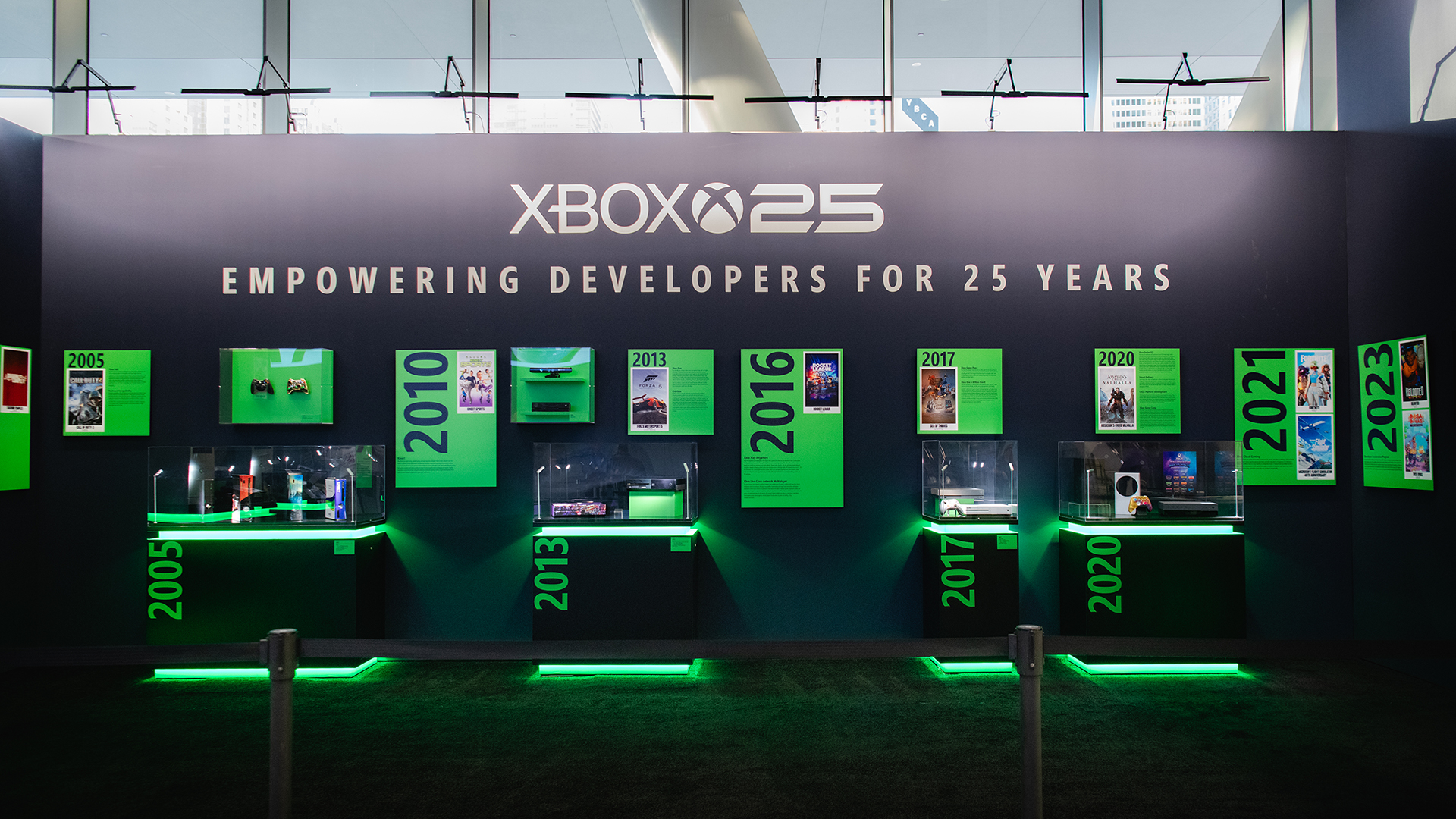
Game Developers Conference 2026 kicked off this week and game developers from around the world have descended on the Moscone Convention Center in San Francisco, California. Attendees that come by the Xbox Lounge in Moscone South Lobby can journey through our exhibit featuring key moments across 25 years of Xbox history, from the creation of the original Xbox Prototype through our latest hardware innovations and publishing programs. If you’re not able to attend the show this week, don’t worry: we’ve got an in-depth look at the booth right here.
2000 | Xbox Prototype “DirectX Box”
Microsoft’s original prototype console was known internally as the “Direct X Box,” and the name stuck, albeit in a shortened form. The original Xbox represents a deliberate bet on consoles evolving from sealed appliances to dynamic platforms that developers would be excited to build on. Designed as a forward-looking console with high-end PC-class performance, the project also leaned into “PC-style” development and the coming shift to broadband. Its goal was to shrink the gap between PC and console development by using familiar tools, standard APIs, and a smoother path from prototype to shipped product. For studios, Xbox wanted to be approachable, transparent, and ready for iterative development at a time when console tech was often opaque and proprietary. For the industry, it signaled that connected services would be central to the next era of games.
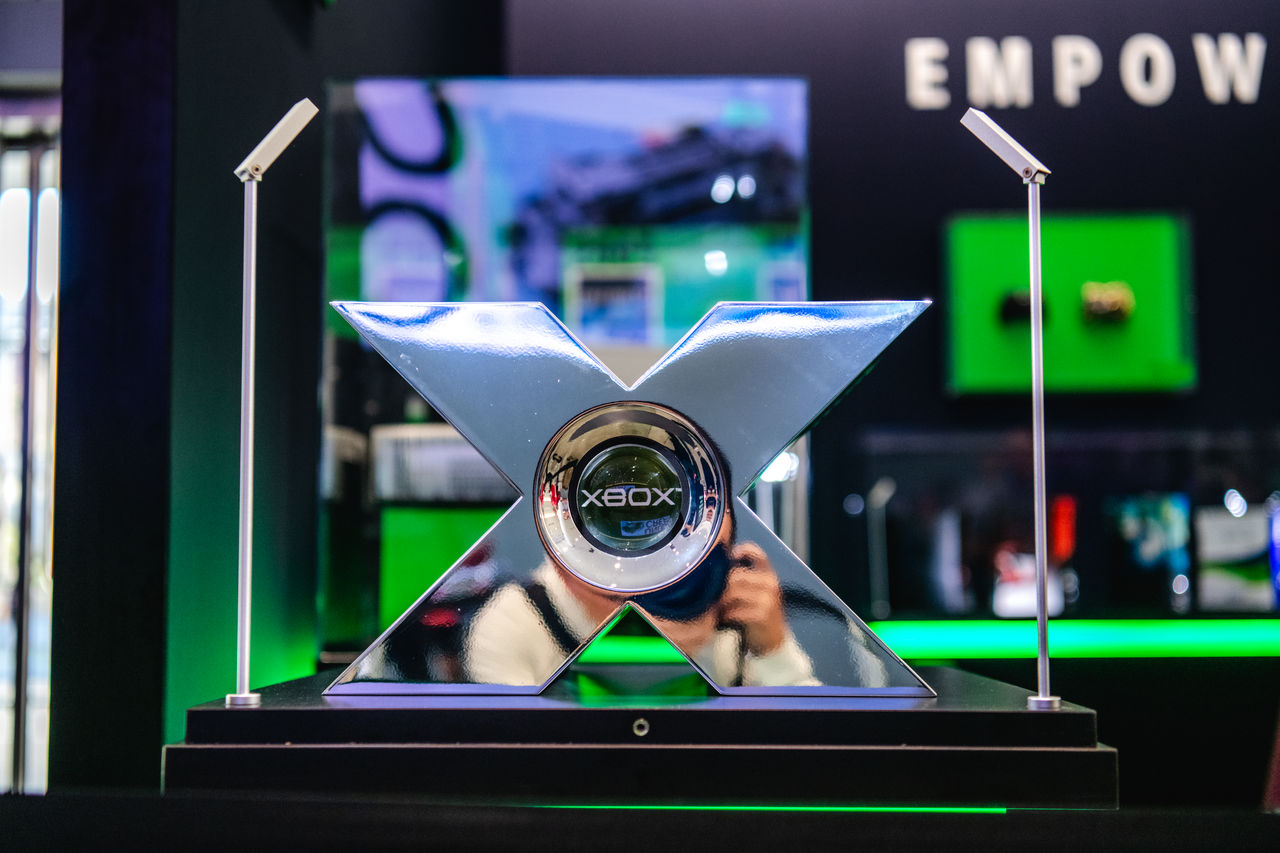
Xbox Prototype “DirectX Box”
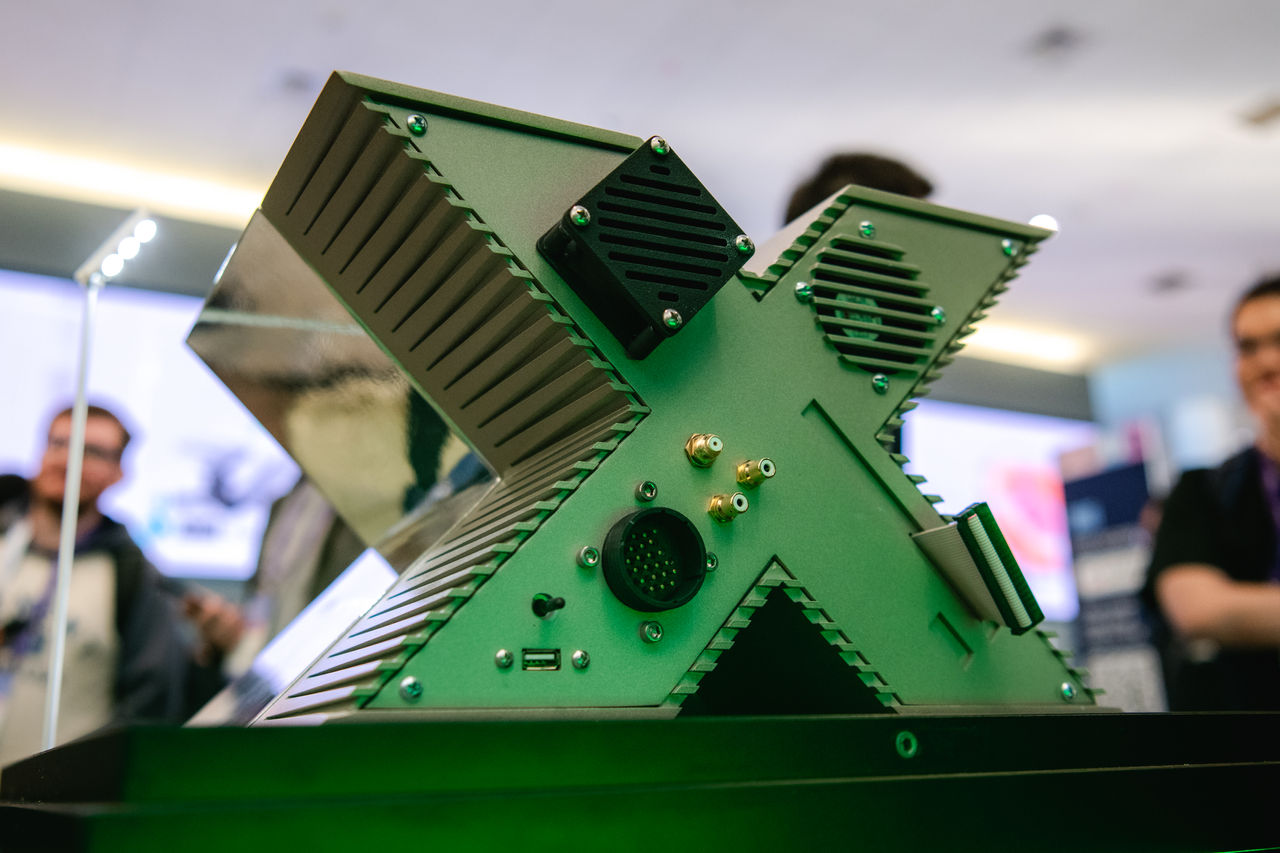
Xbox Prototype “DirectX Box”
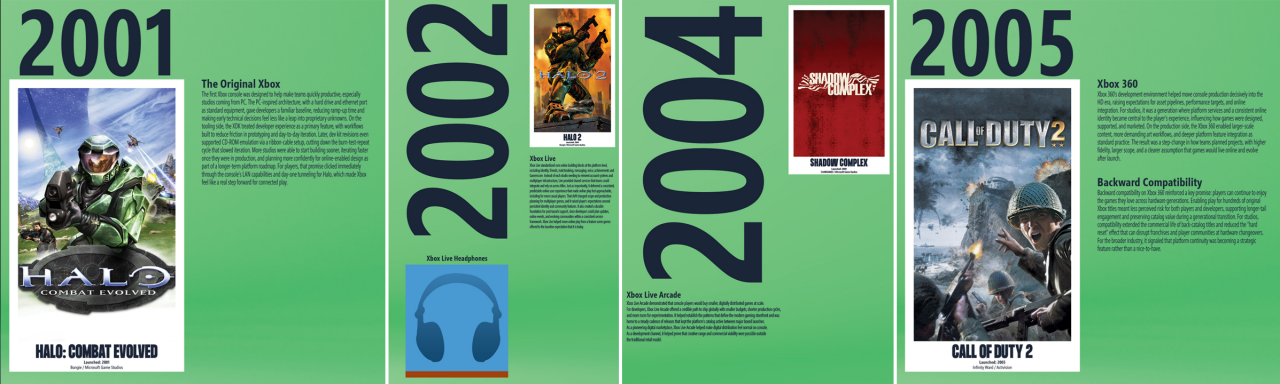
2001 | The Original Xbox
The first Xbox console was designed to help make teams quickly productive, especially studios coming from PC. The PC-inspired architecture, with a hard drive and ethernet port as standard equipment, gave developers a familiar baseline, reducing ramp-up time and making early technical decisions feel less like a leap into proprietary unknowns. On the tooling side, the XDK treated developer experience as a primary feature, with workflows built to reduce friction in prototyping and day-to-day iteration. Later, dev kit revisions even supported CD-ROM emulation via a ribbon-cable setup, cutting down the burn-test-repeat cycle that slowed iteration. More studios were able to start building sooner, iterating faster once they were in production, and planning more confidently for online-enabled design as part of a longer-term platform roadmap. For players, that promise clicked immediately through the console’s LAN capabilities and day-one tunneling for Halo, which made Xbox feel like a real step forward for connected play.
Xbox Specs
- CPU – 733 MHz Intel Pentium III
- GPU – Nvidia NV2A @233 MHz (Geforce 3 derived)
- Memory – 64MB DDR at 6.4 GB/s
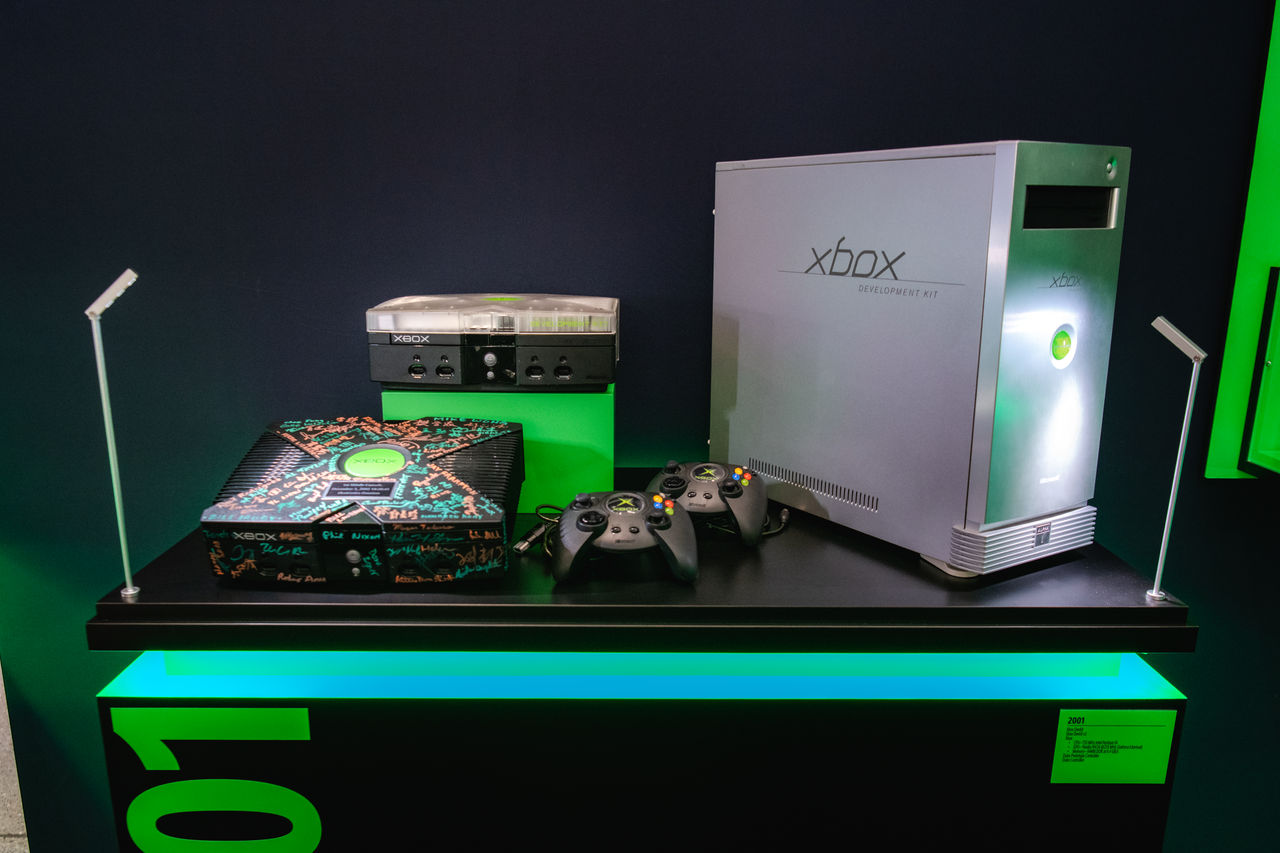
The Original Xbox
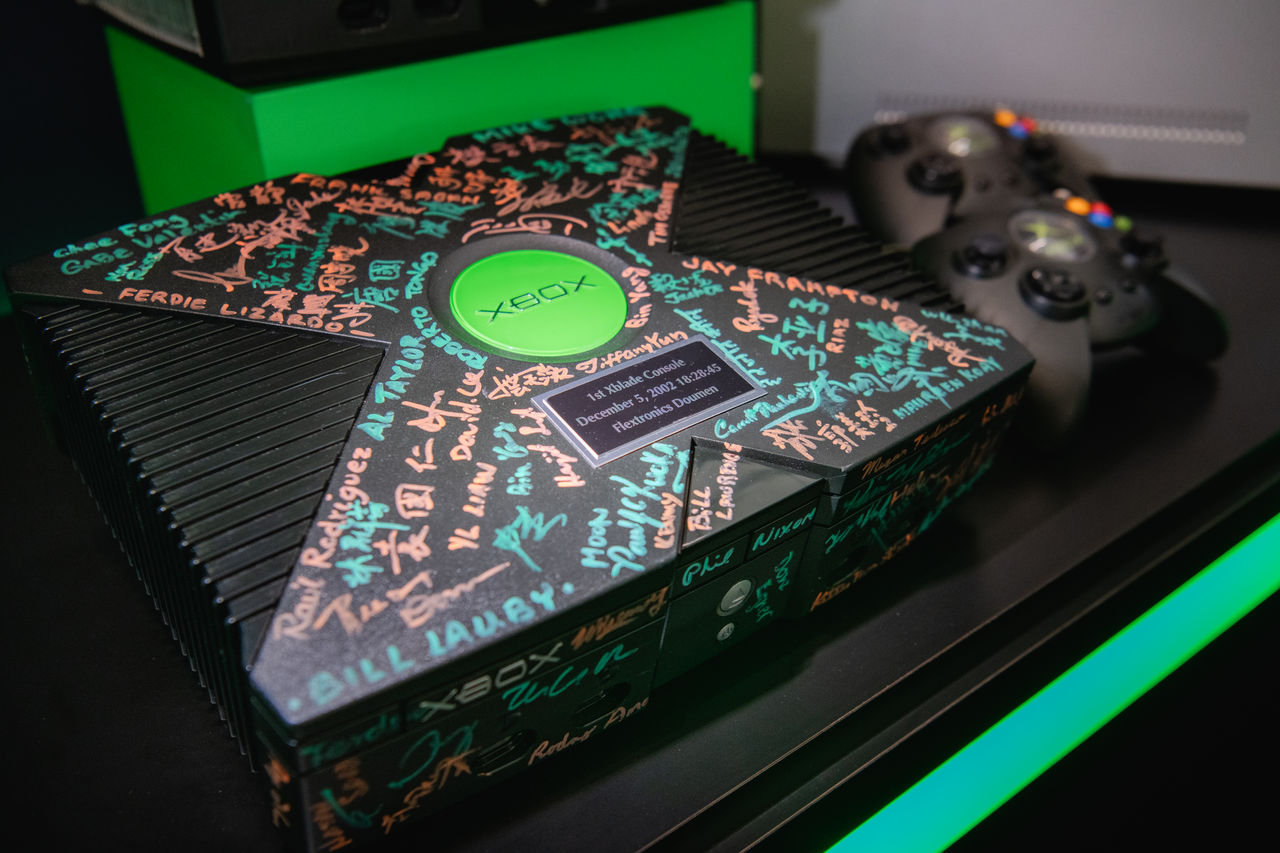
The Original Xbox
2002 | Xbox Live
Xbox Live standardized core online building blocks at the platform level, including identity, friends, matchmaking, messaging, voice, achievements and Gamerscore. Instead of each studio needing to reinvent account systems and multiplayer infrastructure, Live provided shared services that teams could integrate and rely on across titles. Just as importantly, it delivered a consistent, predictable online user experience that made online play feel approachable, including for more casual players. That shift changed scope and production planning for multiplayer games, and it raised player's expectations around persistent identity and community features. It also created a durable foundation for post-launch support, since developers could plan updates, online events, and evolving communities within a consistent service framework. Xbox Live helped move online play from a feature some games offered to the baseline expectation that it is today.
2004 | Xbox Live Arcade
Xbox Live Arcade demonstrated that console players would buy smaller, digitally distributed games at scale. For developers, Xbox Live Arcade offered a credible path to ship globally with smaller budgets, shorter production cycles, and more room for experimentation. It helped establish the patterns that define the modern gaming storefront and was home to a steady cadence of releases that kept the platform’s catalog active between major boxed launches. As a pioneering digital marketplace, Xbox Live Arcade helped make digital distribution feel normal on console. As a development channel, it helped prove that creative range and commercial viability were possible outside the traditional retail model.
2005 | Xbox 360
Xbox 360’s development environment helped move console production decisively into the HD era, raising expectations for asset pipelines, performance targets, and online integration. For studios, it was a generation where platform services and a consistent online identity became central to the player's experience, influencing how games were designed, supported, and marketed. On the production side, the Xbox 360 enabled larger-scale content, more demanding art workflows, and deeper platform feature integration as standard practice. The result was a step-change in how teams planned projects, with higher fidelity, larger scope, and a clearer assumption that games would live online and evolve after launch.
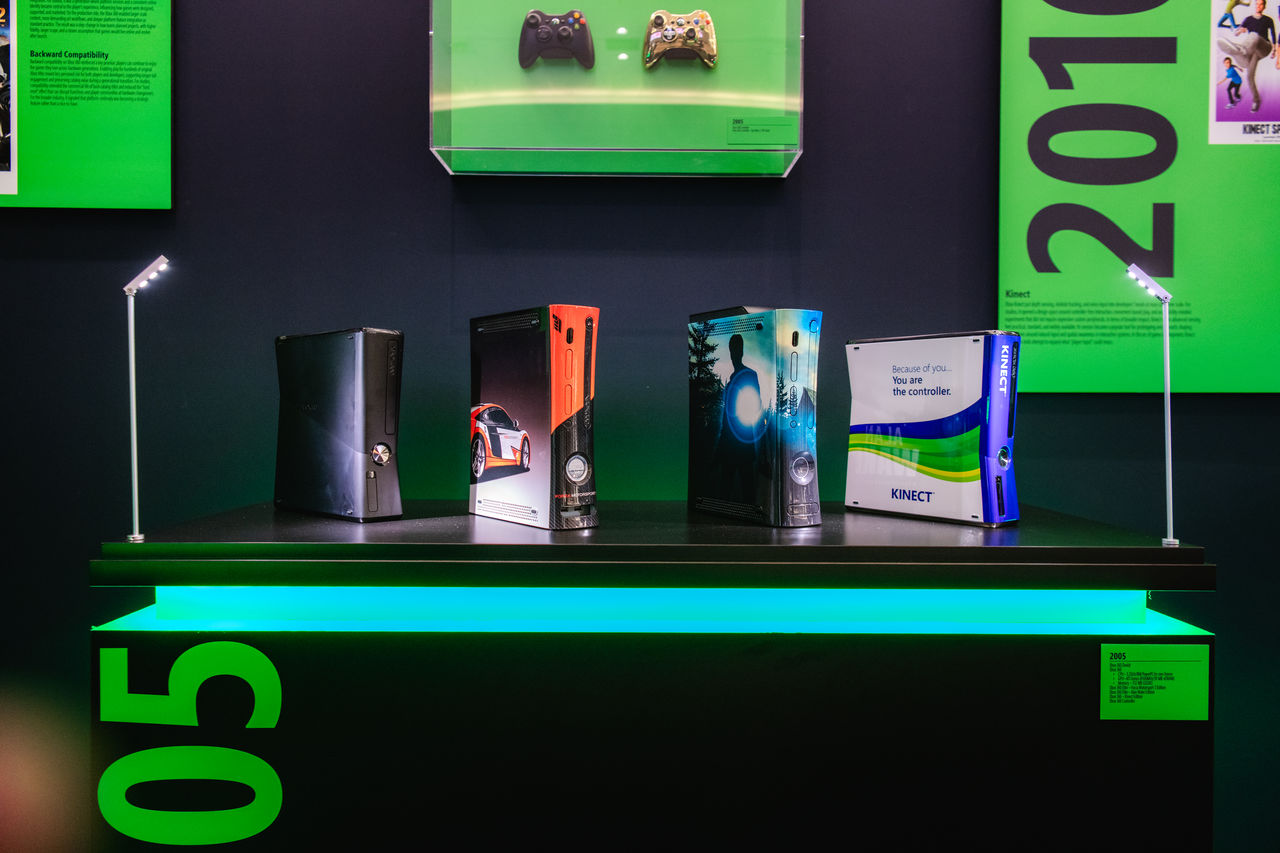
Xbox 360
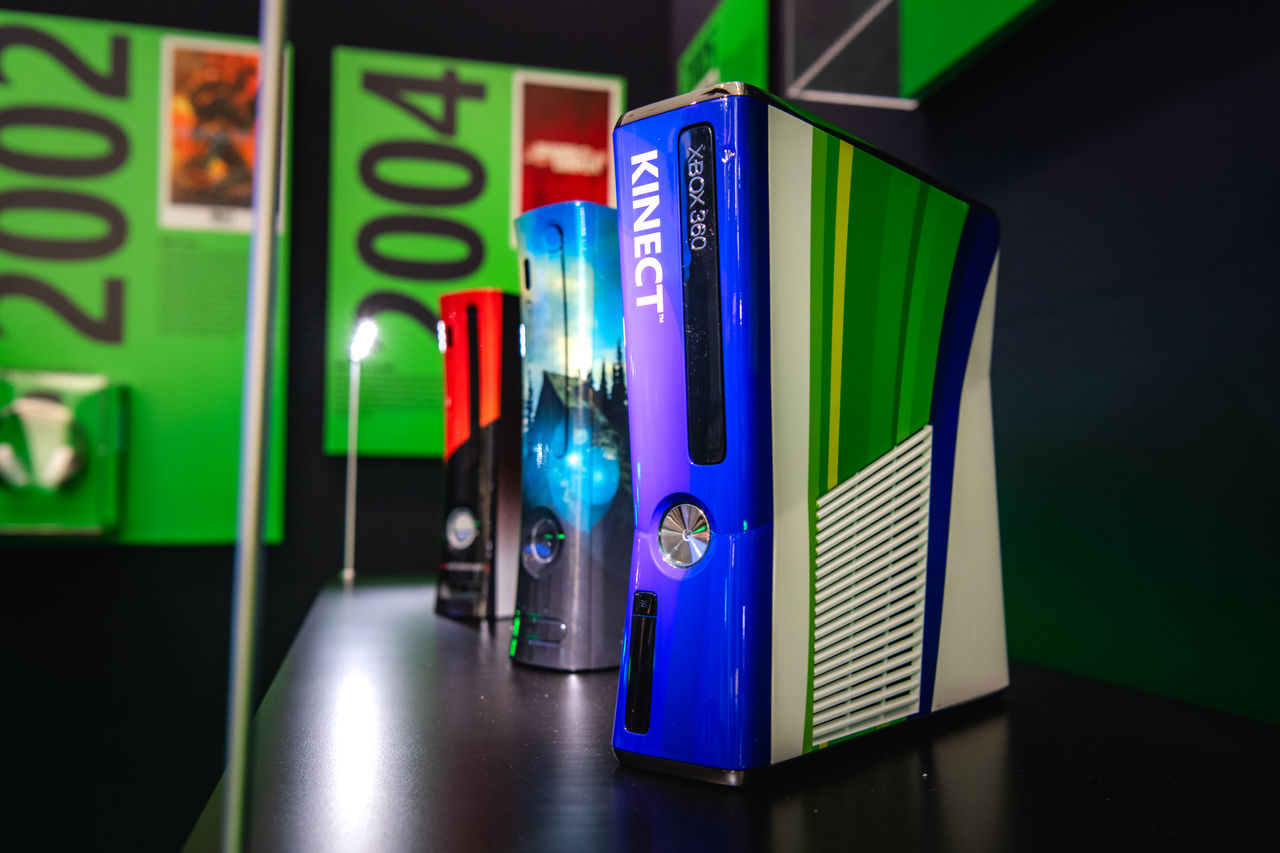
Xbox 360
2005 | Backward Compatibility
Backward compatibility on Xbox 360 reinforced a key promise: players can continue to enjoy the games they love across hardware generations. Enabling play for hundreds of original Xbox titles meant less perceived risk for both players and developers, supporting longer-tail engagement and preserving catalog value during a generational transition. For studios, compatibility extended the commercial life of back-catalog titles and reduced the "hard reset" effect that can disrupt franchises and player communities at hardware changeovers. For the broader industry, it signaled that platform continuity was becoming a strategic feature rather than a nice-to-have.
2010 | Kinect
Xbox Kinect put depth sensing, skeletal tracking, and voice input into developers’ hands at mass consumer scale. For studios, it opened a design space around controller-free interaction, movement-based play, and accessibility-minded experiments that did not require expensive custom peripherals. In terms of broader impact, Kinect made advanced sensing feel practical, standard, and widely available. Its sensors became a popular tool for prototyping and research, shaping expectations around natural input and spatial awareness in interactive systems. In the arc of game development, Kinect stands as a bold attempt to expand what “player input” could mean.
2013 | Xbox One
Xbox One reflected a console era where games were expected to ship, patch, and evolve continuously. The platform environment baked in persistent identity and connected services, which pushed teams to treat post-launch support as a core production track. For developers, that meant planning earlier for updates, live events, balance changes, and content drops, plus building systems where progression, social features, and player data supported retention over time. The devkit also reinforced PC-like development expectations on console, foregrounding iteration speed, profiling, and continuous delivery alongside launch-day readiness. In practice, this shift changed how teams staffed and scheduled projects, increased the importance of operational tooling, and helped normalize the idea that a console game’s real life begins after release.
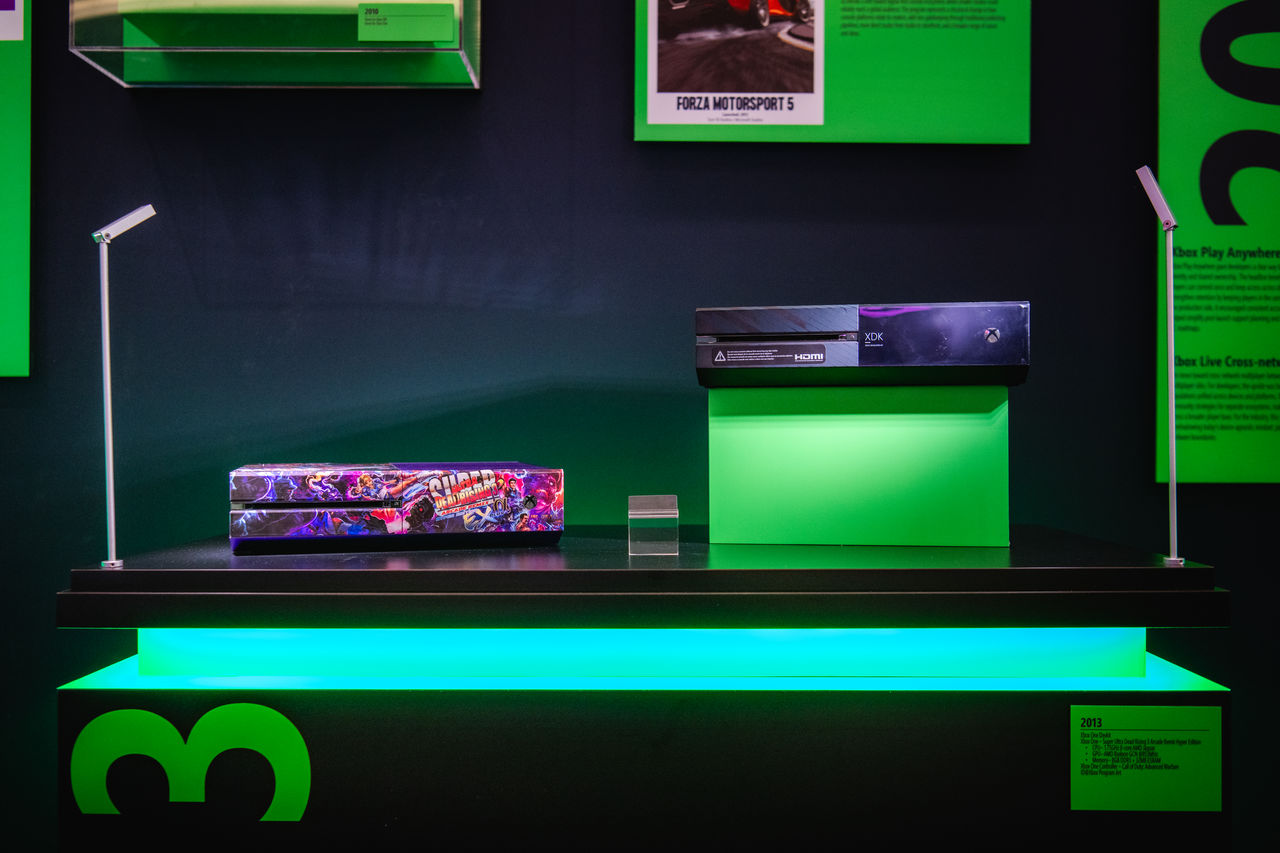
Xbox One
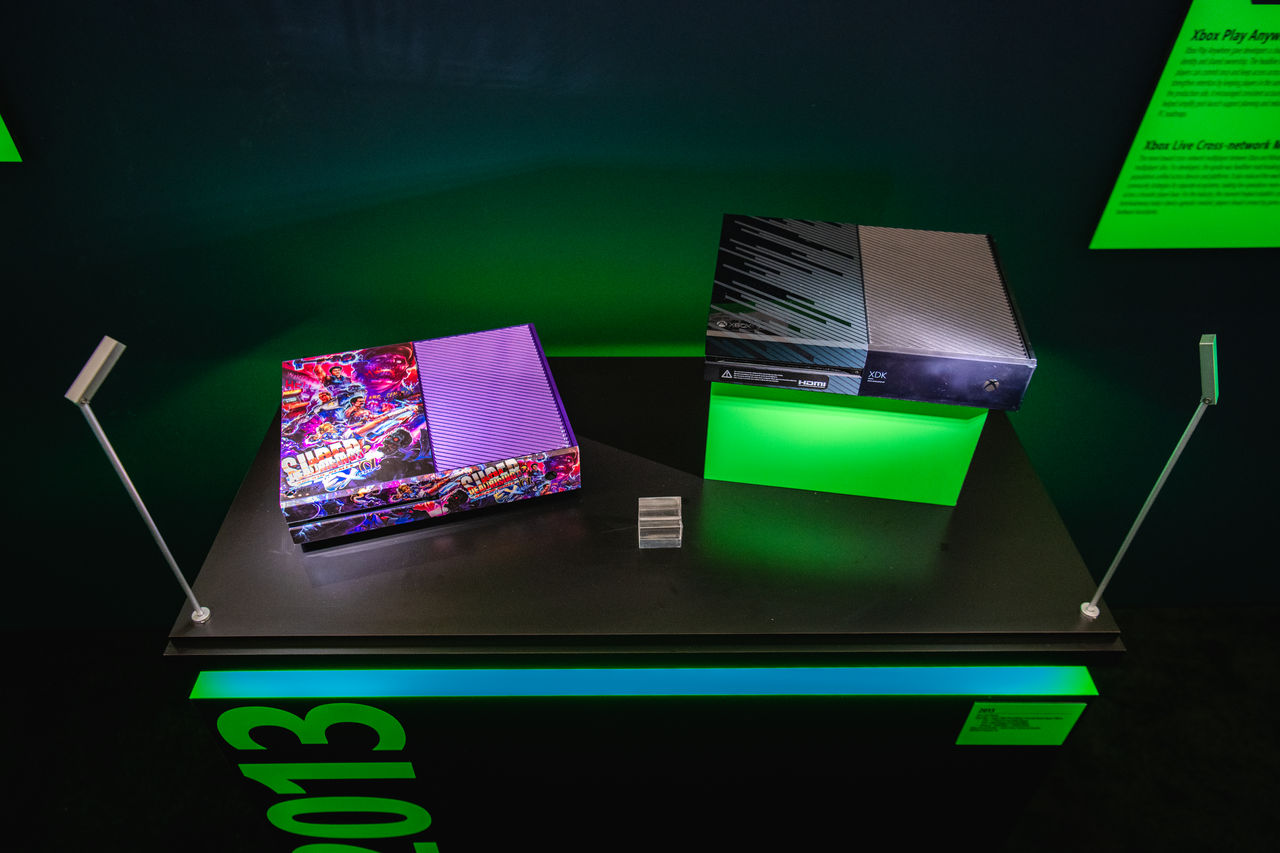
Xbox One
2013 | ID@Xbox
ID@Xbox enabled console self-publishing for independent teams by simplifying onboarding and pairing platform access and dev kits with structured support. For developers, it reduced the friction that historically separated the acquisition of a devkit from actually shipping a game, offering clearer pathways through certification, marketing, and storefront visibility. For players, it widened the catalog with more experimental projects and faster iteration than the retail-only era allowed. Industry-wide, the program helped accelerate a shift toward digital-first console ecosystems where smaller studios could reliably reach a global audience. The program represents a structural change in how console platforms relate to creators, with less gatekeeping through traditional publishing pipelines, more direct routes from studio to storefront, and a broader range of voices and ideas.
2016 | Xbox Play Anywhere
Xbox Play Anywhere gave developers a clear way to ship a game across Xbox One and Windows 10 with a unified player identity and shared ownership. The headline benefit was a meaningful expansion of the addressable audience, since players can commit once and keep access across devices. Shared saves, progress, add-ons, and achievements helped to strengthen retention by keeping players in the same ecosystem even as their play habits shift between console and PC. On the production side, it encouraged consistent account, cloud-save, and update pipelines across both platforms, which helped simplify post-launch support planning and reduce SKU fragmentation for teams already straddling console and PC roadmaps.
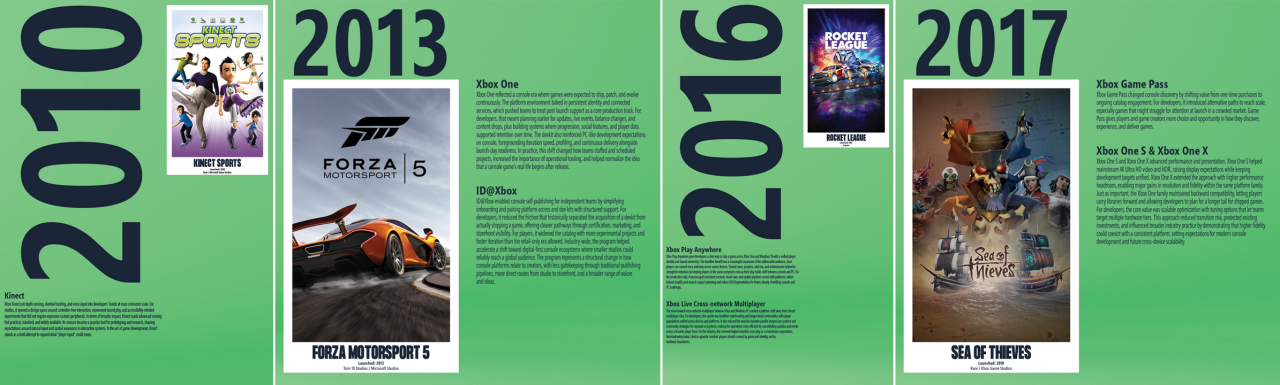
2016 | Xbox Live Cross-network Multiplayer
The move toward cross-network multiplayer between Xbox and Windows PC marked a platform shift away from closed multiplayer silos. For developers, the upside was healthier matchmaking and longer-lived communities, with player populations unified across devices and platforms. It also reduced the need to maintain parallel progression systems and community strategies for separate ecosystems, making live operations more efficient by consolidating updates and events across a broader player base. For the industry, this moment helped establish cross-play as a mainstream expectation, foreshadowing today’s device-agnostic mindset: players should connect by game and identity, not by hardware boundaries.
2017 | Xbox Game Pass
Xbox Game Pass changed console discovery by shifting value from one-time purchases to ongoing catalog engagement. For developers, it introduced alternative paths to reach scale, especially games that might struggle for attention at launch in a crowded market. Game Pass gives players and game creators more choice and opportunity in how they discover, experience, and deliver games.
2017 | Xbox One S & Xbox One X
Xbox One S and Xbox One X advanced performance and presentation. Xbox One S helped mainstream 4K Ultra HD video and HDR, raising display expectations while keeping development targets unified. Xbox One X extended the approach with higher performance headroom, enabling major gains in resolution and fidelity within the same platform family. Just as important, the Xbox One family maintained backward compatibility, letting players carry libraries forward and allowing developers to plan for a longer tail for shipped games. For developers, the core value was scalable optimization with tuning options that let teams target multiple hardware tiers. This approach reduced transition risk, protected existing investments, and influenced broader industry practice by demonstrating that higher fidelity could coexist with a consistent platform, setting expectations for modern console development and future cross-device scalability.
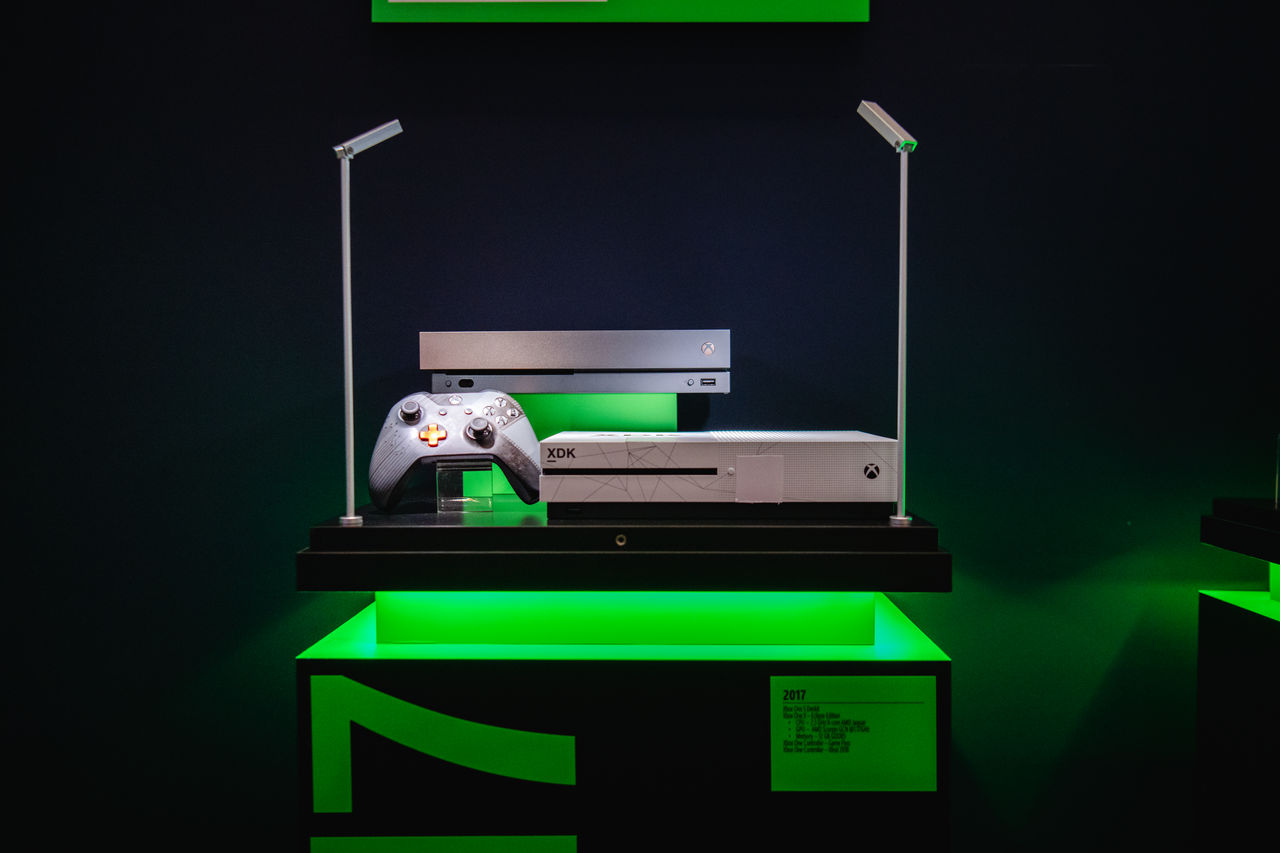
Xbox One S & Xbox One X
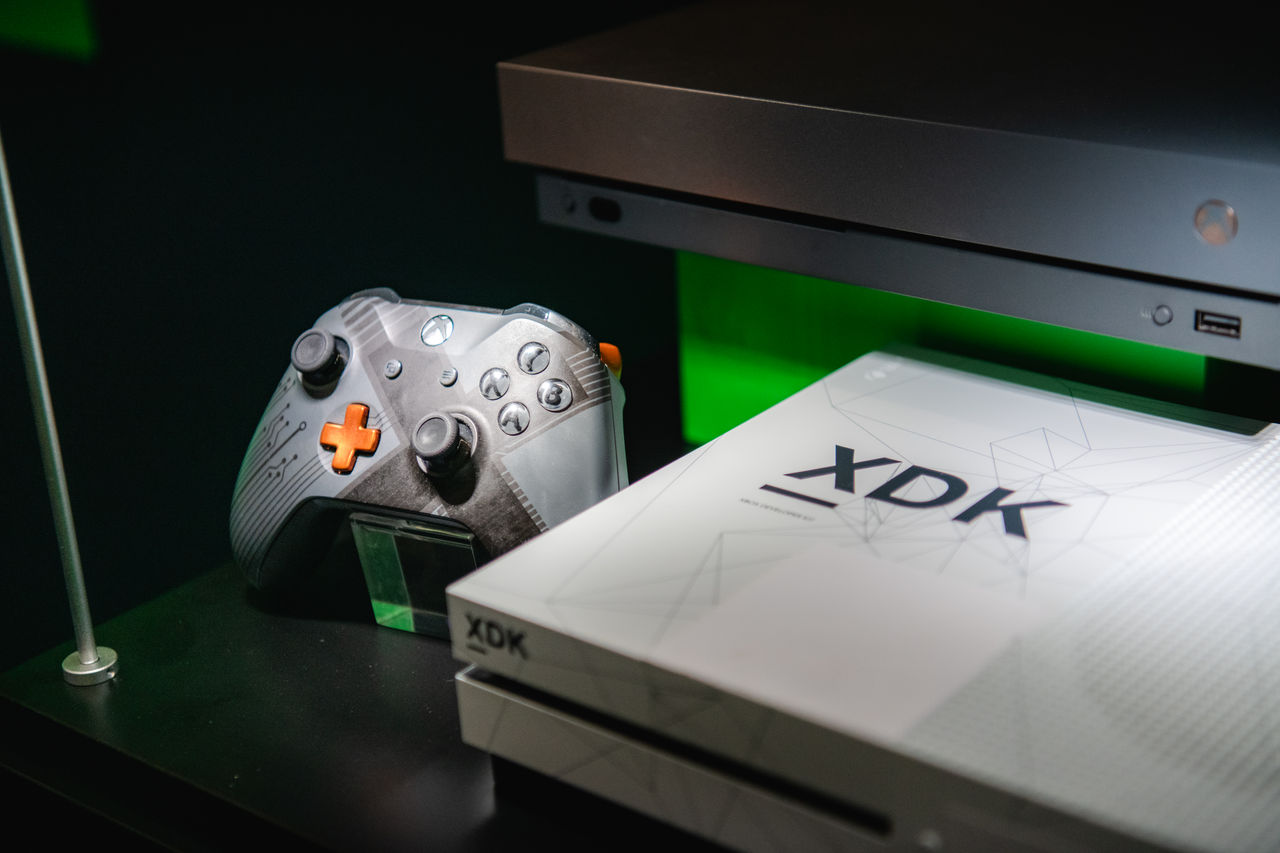
Xbox One S & Xbox One X
2020 | Xbox Series X|S
Xbox Series X|S established a new baseline built around SSD-forward design, modern rendering features, and predictable scaling across two performance tiers. For developers, the core win was the ability to target a premium console and a more accessible sibling device without splitting the pipeline, keeping one build strategy while tuning performance deliberately. Faster storage and updated hardware expectations made streaming, memory budgets, and load behavior first-order design inputs, opening new options for world layout, traversal pacing, and how content is staged. The two-tier approach also pushed production planning toward explicit scalability, with developers empowered to target parameters like resolution, frame rate, and feature sets across performance tiers. As a result, studios could transition generations with less risk, broaden their addressable audience, and keep production complexity under control while still delivering clear tiered benefits.
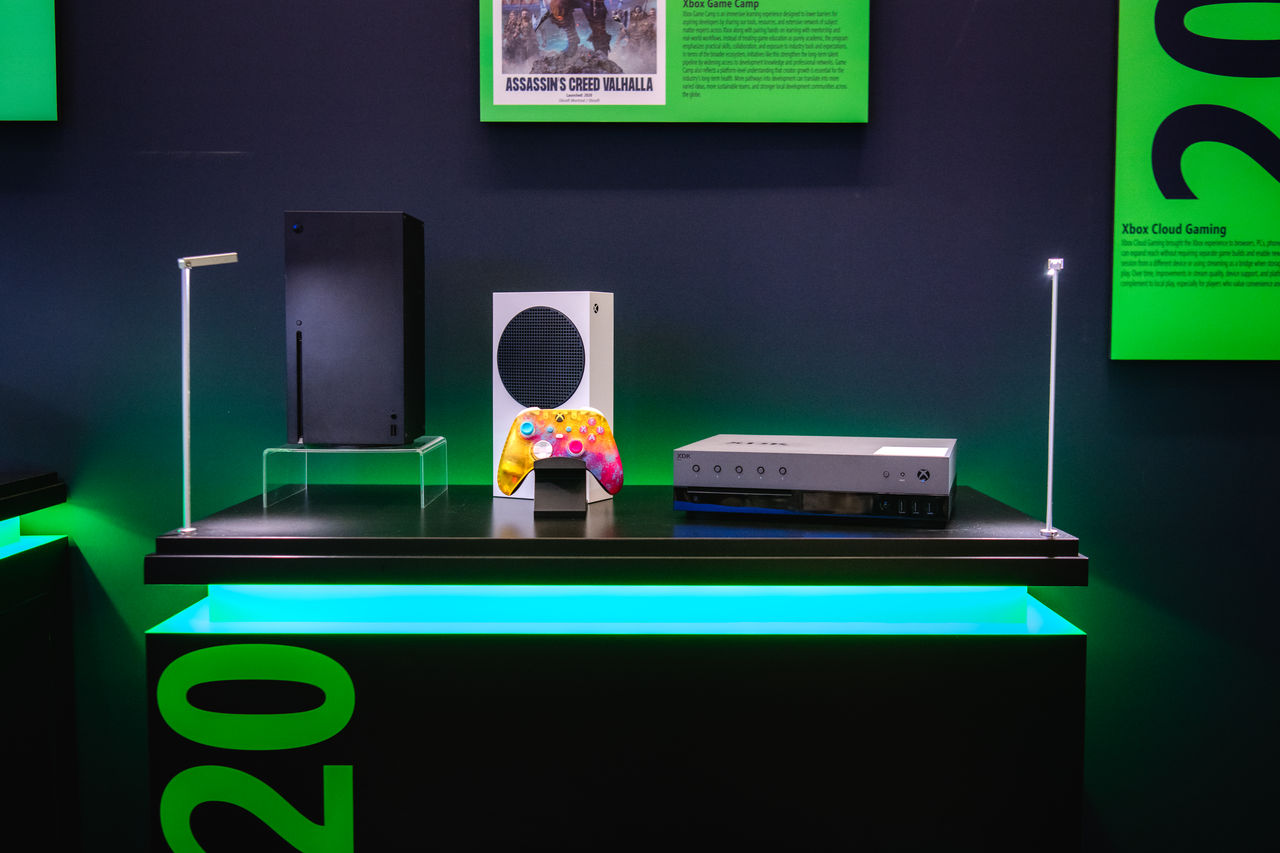
Xbox Series X|S
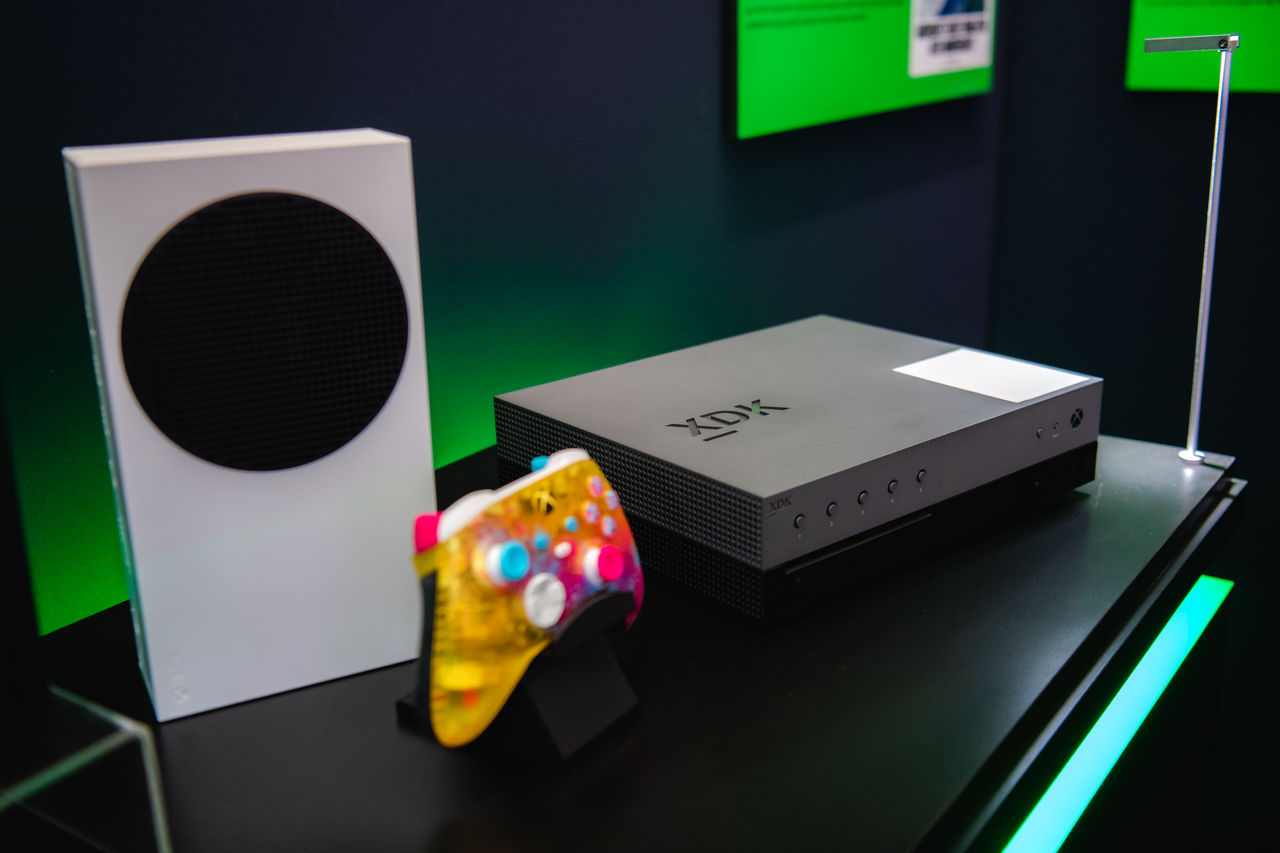
Xbox Series X|S
2020 | Smart Delivery
Smart Delivery helps reduce cross-generation confusion by giving players the best version of a game for their console automatically. For developers, it cuts down on duplicate SKUs and simplifies versioning and storefront messaging during transition years. It also supports player trust by making “buy once, play the right version” the default, even when editions and upgrades still exist.
2020 | Cross-Platform Development
By 2020, Xbox leaned into cross-platform development across console, PC, and cloud, unified through shared services and increasingly consistent tooling. For developers, this direction reduces duplicated engineering and helps teams plan releases around a broader device landscape from day one. From an industry perspective, cross-platform development is a long-term efficiency gain that also expands reach since the same core build can be delivered across more endpoints with fewer structural changes.
2020 | Xbox Game Camp
Xbox Game Camp is an immersive learning experience designed to lower barriers for aspiring developers by sharing our tools, resources, and extensive network of subject matter experts across Xbox along with pairing hands-on learning with mentorship and real-world workflows. Instead of treating game education as purely academic, the program emphasizes practical skills, collaboration, and exposure to industry tools and expectations. In terms of the broader ecosystem, initiatives like this strengthen the long-term talent pipeline by widening access to development knowledge and professional networks. Game Camp also reflects a platform-level understanding that creator growth is essential for the industry's long-term health. More pathways into development can translate into more varied ideas, more sustainable teams, and stronger local development communities across the globe.
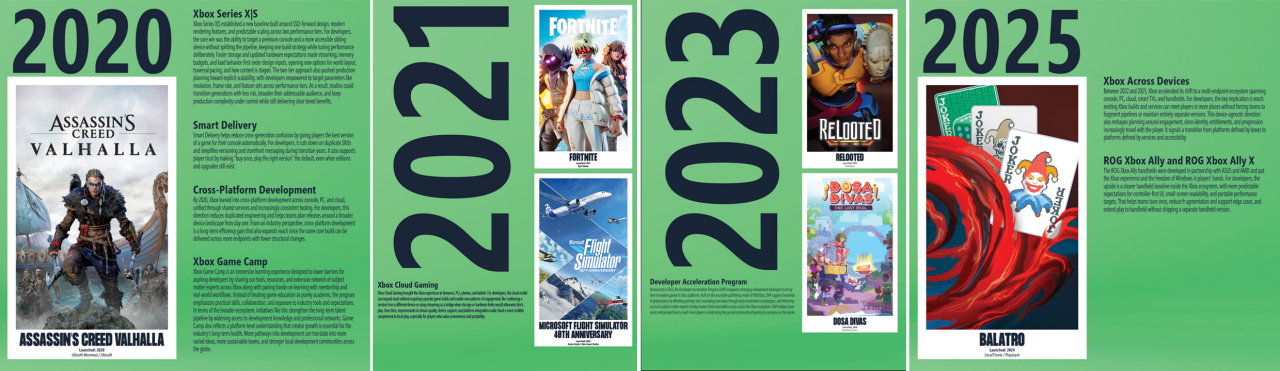
2021 | Xbox Cloud Gaming
Xbox Cloud Gaming brought the Xbox experience to browsers, PCs, phones, and tablets. For developers, the cloud model can expand reach without requiring separate game builds and enable new patterns of engagement, like continuing a session from a different device or using streaming as a bridge when storage or hardware limits would otherwise block play. Over time, improvements in stream quality, device support, and platform integration made cloud a more credible complement to local play, especially for players who value convenience and portability.
2023 | Developer Acceleration Program
Announced in 2023, the Developer Acceleration Program (DAP) empowers emerging independent developers to bring their innovative games to Xbox platforms. Built on the accessible publishing model of ID@Xbox, DAP supports hundreds of global teams by offsetting porting costs, incubating new ideas through early investment in prototypes, and delivering access to subject matter experts to help creators find sustainable success across the Xbox ecosystem. DAP enables more voices and perspectives to reach more players to help bring the joy and community of gaming to everyone on the planet.
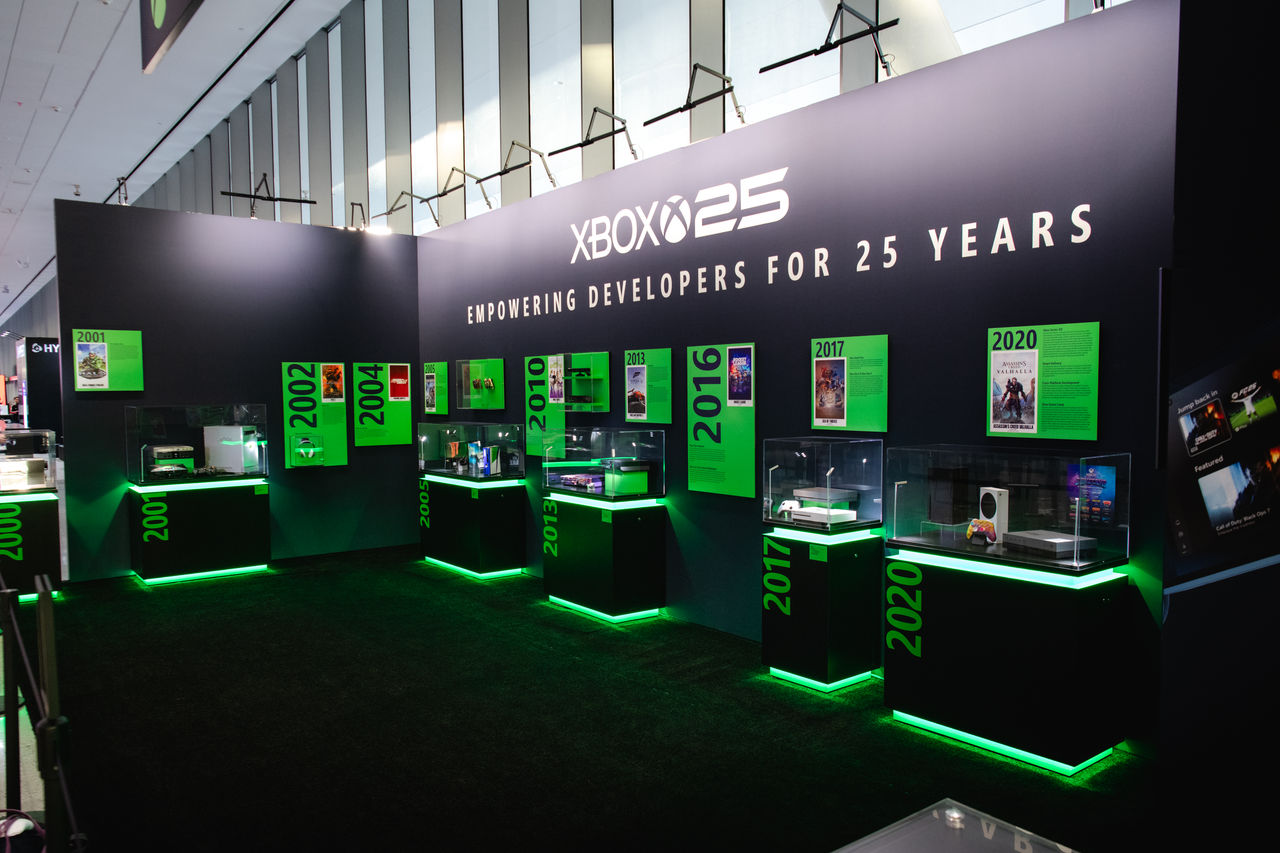
Another view of the Xbox GDC 2026 booth.
2025 | Xbox Across Devices
Between 2022 and 2025, Xbox accelerated its shift to a multi-endpoint ecosystem spanning console, PC, cloud, smart TVs, and handhelds. For developers, the key implication is reach: existing Xbox builds and services can meet players in more places without forcing teams to fragment pipelines or maintain entirely separate versions. This device-agnostic direction also reshapes planning around engagement, since identity, entitlements, and progression increasingly travel with the player. It signals a transition from platforms defined by boxes to platforms defined by services and accessibility.
2025 | ROG Xbox Ally and ROG Xbox Ally X
The ROG Xbox Ally handhelds were developed in partnership with ASUS and AMD and put the Xbox experience and the freedom of Windows in players' hands. For developers, the upside is a clearer handheld baseline inside the Xbox ecosystem, with more predictable expectations for controller-first UI, small-screen readability, and portable performance targets. That helps teams tune once, reduce fragmentation and support edge cases, and extend play to handheld without shipping a separate handheld version.