
How Variable Rate Compute Shaders Improved GPU Performance in DOOM: The Dark Ages
A closer look at how a close engineering collaboration between id Software and Xbox ATG brought DOOM: The Dark Ages to life.

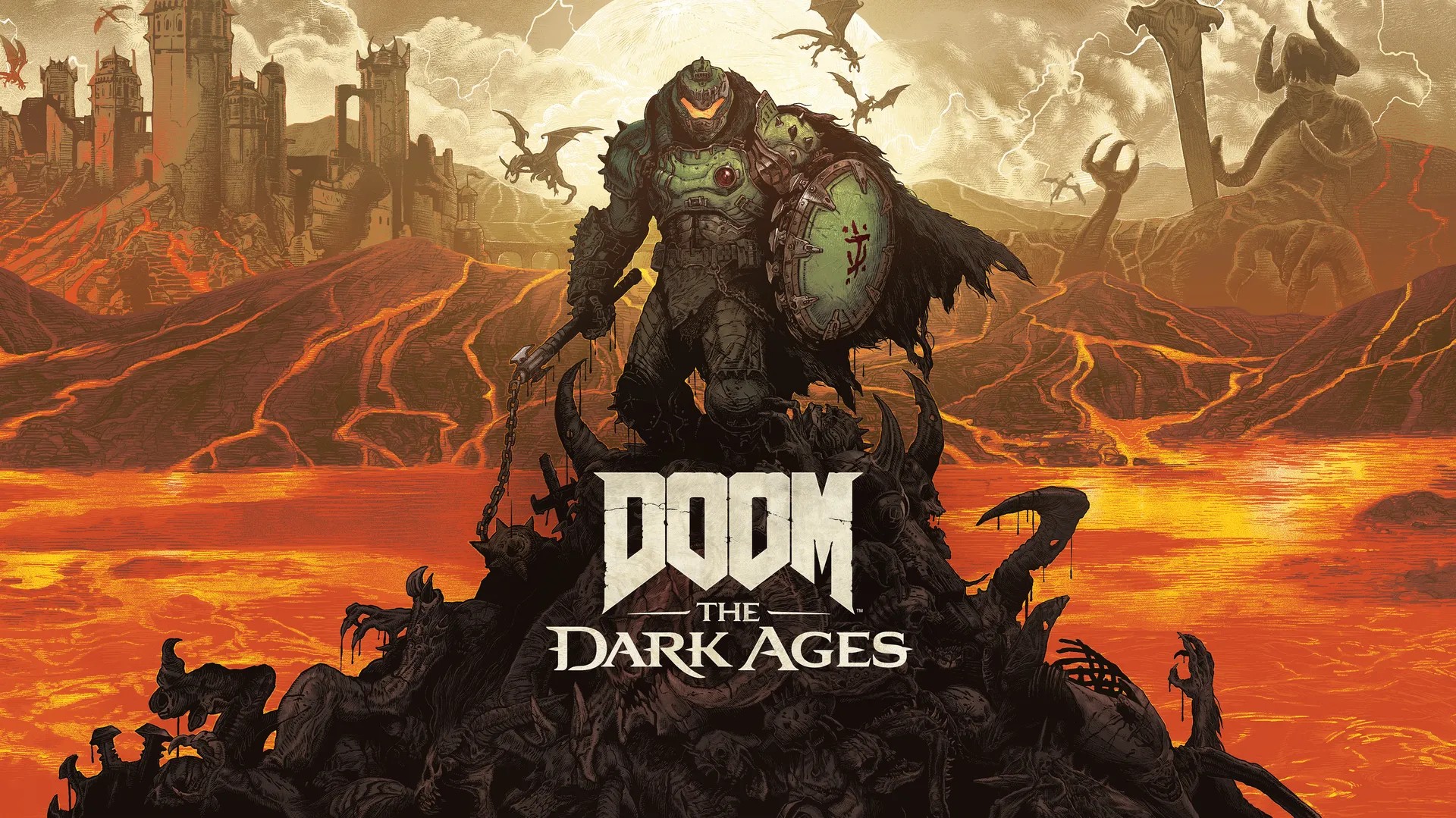
At the last Graphics Programming Conference, developers Philip Hammer (id Software) and Martin Fuller (Xbox Advanced Technologies Group), spoke on techniques to optimize rendering performance in large-scale environments. The talk detailed implementing specialized shaders to manage pixel computation efficiently across various hardware platforms.
The team’s goal was to ship a visually ambitious title with a locked 60 FPS across consoles and capable PCs by reducing unnecessary pixel work in expensive compute-based rendering passes. That game? DOOM: The Dark Ages, the sequel to one of the best-looking first-person shooters of the generation.
In the talk, Hammer explained that while DOOM Eternal benefited heavily from hardware Variable Rate Shading (VRS) in forward-rendered opaque/transparent passes, cutting pixel shader invocations, DOOM: The Dark Ages replaced the main opaque pass with a compute-heavy deferred pipeline (visibility buffer + deferred texturing + deferred lighting).
However, when VRS was enabled in the new pipeline, real-world performance gains from the new renderer were eroded—creating a need for a VRS-like efficiency mechanism for full-screen compute shaders. The team’s solution was to implement Variable Rate Compute Shaders (VRCS), a software technique that mimics the benefits of VRS for compute workloads by reducing unique pixel calculations and retiring entire GPU waves early.
To learn more about how Variable Rate Compute Shaders were used in DOOM: The Dark Ages, watch the video below:
Thanks to the implementation of VRCS, the GPU savings were clear, as the team saw ~1–2 ms GPU frame time saved in a 60 Hz title (high value at tight budgets). They gave an example breakdown (at ~85% dynamic resolution) that saw up to ~1 ms from deferred texturing, ~0.4 ms from deferred G-buffer update, ~0.8 ms from deferred lighting; commonly around ~30% reduction in the heaviest deferred passes.
Ultimately, Variable Rate Compute Shaders helped maintain the franchise’s core promise of stable 60 FPS while increasing scene fidelity and content density. This was particularly important for the game on Xbox Series S, enabling frame-time and resolution targets. From rapid iteration under shipping deadlines to shared technological knowledge, the work highlights the value of close engineering collaboration between id Software and Xbox ATG.